Mechanic

Runic Ward

Runic Ward protects the final point of Life. When damage would reduce Life to 0, Life stops at 1 and current Runic Ward absorbs the remainder. The character still dies if the remaining damage is greater than the Ward available.
0.5.4d
Current data

Catalog version 0.5.4d

No direct 0.5 patch change is linked to this page. The displayed values are current for catalog version 0.5.4d.

What Runic Ward does

Current rules

Treat current Runic Ward as a buffer behind Life, not as one-shot immunity. Damage is mitigated normally, then Energy Shield and Life handle it according to their usual rules. Only the part that would take Life below 1 moves to Ward. Life loss, costs, sacrifice, and removal are not damage, so Ward does not protect against them.

Fatal damage threshold
The largest damage amount that current Life and Ward can absorb is current Life minus 1, plus current Runic Ward. With 1,000 current Life and 100 current Ward, 1,099 damage leaves 1 Life and 0 Ward. A 1,100 damage instance is fatal if nothing else changes the damage.
Damage versus Life loss
Runic Ward can absorb fatal damage from Hits or damage over time because both deal damage. It does not stop a Life cost, Life sacrifice, or an effect that loses or removes Life. Those effects can kill a character that is sitting at 1 Life behind Ward.
Damage order
Avoidance and mitigation are resolved before damage removes resources. Energy Shield normally protects Life first, subject to bypass rules. Life is then reduced to a minimum of 1 while Ward absorbs any fatal remainder.
Regeneration
Runic Ward constantly regenerates at a base rate of 5% of maximum Ward per second. It has no default recharge delay, although a skill or modifier can prevent recovery or replace the normal behavior.
Maximum and current Ward
Maximum Runic Ward sets the normal cap. Current Ward is the amount available to absorb damage or pay a Ward cost. Recovery can exceed the maximum only when an effect explicitly says that it can Overflow.
Explicit scaling
Modifiers to Armour, Evasion, and Energy Shield do not increase Runic Ward unless they name Ward too. Armour quality grants 1% more Armour, Evasion, Energy Shield, and Runic Ward per point of quality.
Low Runic Ward
Low Runic Ward means current Ward is 35% of maximum or lower. Runes and other effects that require Low Runic Ward use this threshold.
Monster culling
A monster with any Runic Ward cannot be Culled. The immunity lasts while the monster has Ward remaining.
Trial of the Sekhemas
Maximum Runic Ward is added to starting Honour when beginning a Trial of the Sekhemas.

Ways to gain and use Runic Ward

9 cases
01
Verisium Runeforging

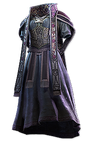
Spend Verisium at the Verisium Anvil to create a Runeforged armour base with Runic Ward. Bases with a level requirement of 55 or lower normally keep their ordinary base defences. Higher-level bases trade some base defences for more Ward.
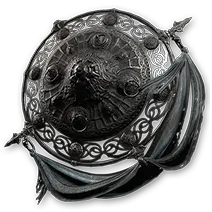
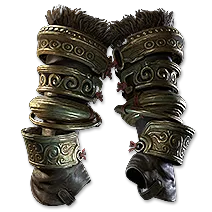
Currency: VerisiumPatch 0.5.3 reduced the defences lost on high-level non-unique bases by about 20% without changing the Ward gained.
02
Ward Rune tiers

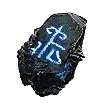
Lesser Ward Rune, Ward Rune, Greater Ward Rune, and Perfect Ward Rune add a flat amount to maximum Runic Ward when socketed into armour.

Currency: Lesser Ward Rune, Ward Rune, Greater Ward Rune, Perfect Ward Rune
03
Charging Rune tiers

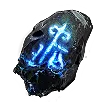
Lesser Charging Rune, Charging Rune, Greater Charging Rune, and Perfect Charging Rune increase Ward regeneration rate on armour. Their Bonded effects grant flat Ward regeneration per second.

Currency: Lesser Charging Rune, Charging Rune, Greater Charging Rune, Perfect Charging Rune
06
Animus Exchange

Sacrifices part of Life to recover Runic Ward. The recovered Ward can Overflow its normal maximum.

Related: Animus Exchange, Overflow
07
Ward costs

Eternal March spends Ward to revive Minions, Wardbound Minions spends all Ward to summon temporary casters, and Runic Infusion adds a Ward cost to supported Attacks in exchange for added Physical damage.

Related: Eternal March, Wardbound Minions, Runic Infusion
08

Limits and exceptions

8 rules
  • Runic Ward is not a health-gate that guarantees survival. A damage instance greater than current Life minus 1 plus current Ward still kills.
  • Life loss, Life costs, sacrifice, and removal are not damage. Read the exact verb used by a flask, skill, rune, or encounter modifier.
  • Current Ward can be lower than maximum Ward because it was damaged or spent. Maximum Ward alone does not describe the damage buffer available now.
  • Effects that spend or lose Ward can remove the safety buffer before the next incoming damage instance.
  • Warding Rune of Obsession makes all damage taken bypass Ward. Its doubled regeneration does not restore Ward's normal damage protection.
  • A high-level Runeforged base gives up some Armour, Evasion, or Energy Shield. Compare the exact before and after base values rather than treating Ward as a free addition.
  • Stats that explicitly affect Armour, Evasion, and Energy Shield do not affect Ward unless Ward is also named.
  • Overflow is not automatic. Recovery stops at maximum Ward unless the effect explicitly permits Overflow.