Deals X to Y Damage
An instantaneous damage value is Hit damage unless the skill states that the component is damage over time.
Mechanic
No direct 0.5 patch change is linked to this page. The displayed values are current for catalog version 0.5.4d.
Separate the source from the delivery. Attack and Spell describe where a skill gets its rules and scaling, while Hit and damage over time describe how a particular damage component is delivered. Read each component separately because one skill can contain both.
An instantaneous damage value is Hit damage unless the skill states that the component is damage over time.
Restricts the modifier to instantaneous Hit damage. A resulting Damaging Ailment can improve indirectly because it derives its starting damage from the Hit.
Requires the skill or effect to deal a Hit. Repeated damage-over-time ticks do not repeatedly activate an on-Hit effect.
Checks whether the character received a Hit event. Read Block-specific wording separately because blocking can negate damage while retaining limited associated consequences.
Multiplies the Hit by its Critical Damage Bonus. Pure damage over time does not independently roll to critically hit.
Uses the relevant damage of the inflicting Hit, then becomes a separate damage-over-time effect with its own magnitude, duration, and mitigation rules.
Describes damage over time. It does not Hit and is not affected by Hit-only modifiers or defences.
Normally deals no damage after a successful Block, but Block has explicit exceptions and does not automatically erase every associated effect.
 MechanicBleeding
Bleeding is a damaging Ailment that deals Physical damage over time and bypasses Energy Shield. It lasts five seconds by default and requires an explicit chance or effect that can inflict Bleeding.
 MechanicPoison
Poison is a damaging Ailment that deals Chaos damage over time and bypasses Energy Shield. It lasts two seconds by default and requires an explicit chance or effect that can inflict Poison.
 MechanicIgnite
Ignite is a damaging Elemental Ailment that deals Fire damage over time for four seconds by default. A Hit's chance to Ignite comes from the target's total Flammability, including Flammability applied by that same Hit.
 MechanicChill
Chill is a non-damaging Elemental Ailment that slows action speed. Cold Hits can Chill without a separate application chance, but a calculated Chill below 30% Magnitude is discarded.
 MechanicFreeze
Freeze is a non-damaging Cold Ailment that prevents a target from moving or acting. Cold Hits can Freeze directly or add Freeze Buildup, and reaching 100% Buildup makes the target Frozen.
 MechanicShock
Shock is a non-damaging Lightning Ailment that makes a target take 20% increased damage by default. Lightning Hits gain a chance to Shock based on post-mitigation damage relative to the target's Elemental Ailment Threshold.
 MechanicElectrocution
Electrocution is a non-damaging Lightning Ailment that interrupts a target and prevents it from performing actions. It lasts five seconds by default, but ordinary Lightning damage cannot build Electrocution without an explicit enabling effect.
 MechanicElemental Ailment Threshold
Elemental Ailment Threshold is the defensive comparison value used when Elemental Hits try to apply Ignite, Chill, Freeze, Shock, or Electrocution. A higher threshold makes those ailments harder to apply and reduces Freeze and Electrocution Buildup received.
MechanicAttackAn Attack is a skill with the Attack tag. It normally takes its base damage, attack speed, and base Critical Hit Chance from an equipped Martial Weapon, unless the skill states a different rule.
MechanicSpellA Spell is a skill with the Spell tag. Any base damage, Cast Time, and base Critical Hit Chance it lists come from the skill rather than the inherent damage, Attack Speed, or base Critical Hit Chance on a weapon.
MechanicDamageDamage is classified on three independent axes: source, delivery, and type. A component can come from an Attack, Spell, Thorns, or another source; deal a Hit or damage over time; and deal Physical, Fire, Cold, Lightning, or Chaos damage.
 MechanicArmour
Armour reduces applicable damage from Hits. By default it applies only to Physical Hit damage, and its reduction depends on the raw damage of each Hit rather than providing one fixed percentage.
 MechanicEvasion
Evasion Rating grants an entropy-based chance to Evade enemy Hits completely. The actual chance compares the defender's Evasion Rating with the Accuracy Rating of the attacker.
 MechanicEnergy Shield
Energy Shield is a rechargeable defensive resource that normally protects Life. Damage is mitigated first, then removes Energy Shield before Life unless the damage or another effect explicitly bypasses it.
 MechanicBlock
Block prevents the damage of a blockable Hit. Passive Block rolls the character's Block chance for each eligible Hit, while active Block from a raised shield guarantees a block from the protected direction under that skill's rules.
 MechanicStun
Stun interrupts the target's current action and briefly prevents it from acting. Path of Exile 2 has two related systems: Light Stun is rolled from the damage of one Hit, while Heavy Stun is caused by filling a separate buildup bar.
 MechanicStun Threshold
Stun Threshold is the target-side reference used to determine Light Stun chance and Heavy Stun buildup. Raising your own threshold makes incoming Stuns less likely, while lowering an enemy's threshold makes that enemy easier to Stun.
MechanicHeavy StunHeavy Stun is the longer disable caused when an enemy's Heavy Stun buildup bar fills. Eligible Hits add buildup based on their damage, and the bar begins to empty after buildup has not been applied for a period.
 MechanicArmour Break
Armour Break lowers a target's Armour by a specified amount. Reaching 0 applies Fully Broken Armour, which removes the target's Armour benefit and has additional effects against monsters.
 MechanicGain
Gain is wording used by several different mechanics. On a damage line, gaining damage as extra creates an additional amount of the named output damage without removing the original damage.
MechanicPhysicalPhysical damage is one of the five Damage Types. It is the most common and the only one reduced by Armour, rather than by a Resistance.
MechanicElementalElemental Damage is the collective name for Fire, Cold, and Lightning Damage. A modifier to Elemental Damage can scale all three types, but each part is still mitigated by its matching Resistance and keeps its own ailment rules.
MechanicFireFire Damage is one of the five damage types. Fire Hits apply Flammability, which supplies chance to Ignite, while Fire Resistance mitigates Fire Hits and Fire damage over time separately.
MechanicColdCold Damage is one of the five damage types. Cold Hits can Chill and build Freeze, but Chill Magnitude, Freeze Buildup, and Freeze Duration are separate values, and Cold damage from Hits cannot build Heavy Stun.
MechanicLightningLightning Damage is one of the five damage types and one of the three Elemental damage types. Lightning Hits can Shock by default, while Electrocution requires a Skill, item, support, or other effect that explicitly enables Electrocution Buildup.
MechanicCritical HitCritical Hits deal +100% extra damage (i.e. twice as much damage) by default. Critical Damage Bonuses can further modify this value.
MechanicSupportA Support Gem modifies one skill when socketed into that skill in the Skills Panel. Compatibility, Support Category, attribute capacity, socket count, and any cost or reservation multiplier all matter before the support can apply.
MechanicAoEArea of Effect, usually shortened to AoE, describes a skill component that applies to targets inside an area instead of selecting only one target. The area can be a circle, cone, line, ring, or another shape defined by the skill.
MechanicProjectileA Projectile is a moving entity created by an Attack or Spell. Projectile describes delivery, not the source type or damage type, so the Projectile can still be an Attack or Spell and can deal any supported damage type.
MechanicMeleeMelee Attacks directly hit with a Strike or deal Melee damage through a Slam. They usually scale from a Martial Weapon or Unarmed base, but Melee is not a damage type and does not include Projectiles created by the Attack.
MechanicChaosChaos is one of the five damage types. Chaos Resistance reduces it, and ordinary Chaos damage removes twice its damage value from Energy Shield instead of bypassing Energy Shield by default.
 MechanicAccuracy
Accuracy Rating determines whether an Attack Hits by being compared with the target's Evasion. Player Attacks also lose Accuracy with distance, while Spells do not use Accuracy.
MechanicSustainedA Sustained skill deals many Hits over time and rolls Critical Hits independently each time it damages an enemy. The tag describes this repeated damage behavior, not a universal duration, frequency, or damage bonus.
MechanicPayoffA Payoff skill gains a powerful extra effect when it Hits an enemy affected by a specified Debuff. It often Consumes that Debuff, and it cannot inflict the same Debuff that enables its Payoff effect.
MechanicFire ResistanceFire Resistance reduces Fire damage taken. It is tracked independently from the other damage-type Resistances, has a default maximum of 75%, and can have a different uncapped value from the value currently used for mitigation.
MechanicCold ResistanceCold Resistance reduces Cold damage taken. It is tracked independently from the other damage-type Resistances, has a default maximum of 75%, and can have a different uncapped value from the value currently used for mitigation.
MechanicLightning ResistanceLightning Resistance reduces Lightning damage taken. It is tracked independently from the other damage-type Resistances, has a default maximum of 75%, and can have a different uncapped value from the value currently used for mitigation.
MechanicChaos ResistanceChaos Resistance reduces Chaos damage taken. It is tracked independently from the other damage-type Resistances, has a default maximum of 75%, and can have a different uncapped value from the value currently used for mitigation.
 MechanicDamage Conversion
Damage Conversion changes part or all of one Hit damage type into another. In Path of Exile 2, the converted portion uses only its new damage type for scaling, mitigation, and default ailment contribution. It no longer keeps the old damage type.
 MechanicRage
Rage is a combat resource that inherently grants 1% more Attack Damage per point. Characters have 30 maximum Rage by default. Rage generation is limited to one Hit every 0.5 seconds, and inherent Rage loss begins after four seconds without gaining Rage or taking damage.
 MechanicRecouped
Recoup is recovery created by damage from a Hit. A percentage of eligible damage is recovered as the stated resource over eight seconds by default. Recoup does not prevent the original damage, does not trigger from damage over time, and cannot save a character from a Hit that is already lethal.
 MechanicRecently
Recently means during the previous four seconds. It creates a rolling condition based on a named event such as being Hit, dealing a Critical Hit, spending Mana, consuming a Charge, reloading, Blocking, or Dodge Rolling. The event, subject, and verb must all match the modifier.
 MechanicFlammability
Flammability is a stackable Debuff that builds from contributing damage and determines the chance for Hits to Ignite. It is not itself an Ailment, and its magnitude is separate from the magnitude of the resulting Ignite.
 MechanicExposure
Exposure is a Debuff that lowers one or more of the target's Resistances. It changes the target's actual resistance, can reduce it below zero, and can improve both Hit and non-Hit damage that uses the affected resistance.
 MechanicStaged
Staged Skills gain discrete stages and use the current stage count to change an effect. The way stages are gained, their maximum, what each stage improves, and when they are spent or removed are defined by the individual Skill.
 MechanicHerald
Herald Skills are Persistent Buffs that reserve Spirit and provide a payoff after a qualifying enemy death or condition. Each Herald has its own trigger, damage component, ailment interaction, and scaling requirements.
MechanicDeflectDeflection Rating gives a chance to Deflect damage from Hits. A normal Deflection prevents 40% of the Hit damage, while the chance depends on your Deflection Rating and the attacker's Accuracy Rating.
MechanicLife LeechLife Leech recovers Life from a percentage of damage dealt by a Hit. A normal Life Leech instance delivers its recovery over one second, subject to the source's eligible damage type and the monster's Leech Resistance.
 MechanicCritical Weakness
Each Critical Weakness stack gives Hits against the affected target +0.5% to Critical Hit Chance. The debuff can have up to 20 stacks.
 MechanicGuard
Guard is a temporary buffer that takes damage from Hits before Life or Energy Shield. It ends when its amount is depleted or its duration expires.
 MechanicParry
Parry is the active Block skill granted by Bucklers. Hold it while facing an enemy to block an eligible Hit, retaliate with a Physical sweep, and apply the Parried debuff.
 MechanicLucky
A Lucky value is rolled twice and the better result is used. Luck applies only to the roll named by the modifier, such as Hit damage, Critical Hit chance, Block chance, or Deflect chance.
 MechanicUnlucky
An Unlucky value is rolled twice and the worse result is used. The modifier affects only the named roll, such as enemy Hit damage, Physical Hit damage, Lightning Hit damage, Critical Hit chance, or Evasion chance.
 MechanicKnockback
Knockback displaces an enemy when a Hit applies it. Standard Knockback pushes the enemy away from you, while Knockback Distance modifiers change how far the enemy would be moved.
 MechanicOnslaught
Onslaught is a Buff that grants 20% increased Skill Speed and 10% increased movement speed. A temporary source normally grants it for four seconds unless that source states another duration or ties it to an ongoing effect.
 MechanicSoul Eater
Soul Eater consumes Souls from nearby deaths and grants 1% increased Skill Speed per Soul, up to 50 Souls. If no new Soul is eaten for four seconds, one Soul is lost every 0.5 seconds until another Soul is eaten or the count reaches zero.
 MechanicAggravating any Bleeding
Aggravating any Bleeding is a trigger condition that succeeds only when a Hit with the specified weapon directly changes at least one existing Bleeding Debuff from not Aggravated to Aggravated.
 MechanicBlood Loss
Blood Loss is the accumulated amount of Physical damage over time a target has actually taken. Bleeding and Corrupted Blood both contribute, and the amount appears as a darker red section of the target's life bar.
 MechanicUnholy Might
Unholy Might is a Buff that grants 30% of all applicable damage as extra Chaos Damage. It creates an additional Chaos portion and does not remove or convert the original damage.
 MechanicRunefather's Challenge
Runefather's Challenge is a debuff that raises an affected enemy's Power by 5. It is applied by Eyes of the Runefather or by a shield carrying Legacy of A Worthy Foe.
MechanicRunefather's BoastRunefather's Boast is a stacking Buff granted by Eyes of the Runefather when you kill an enemy affected by Runefather's Challenge. Each stack grants +1 Armour, +1 Evasion Rating, and +1 Stun Threshold.
 MechanicDecimating Strike
Decimating Strike makes a Hit against a Full Life enemy remove a random 5% to 30% of its Life immediately before the Hit's damage is applied. It is granted by the Witchhunter notable Judge, Jury, and Executioner and by Aerisvane's Wings.
 MechanicReveal Weaknesses
Reveal Weaknesses highlights random sections of a Rare or Unique enemy's Life bar. The highlighted sections total 45% of maximum Life. While the enemy's current Life is inside one of those sections, it has an Open Weakness.
 MechanicSurrounded
You are Surrounded when at least five enemies are within 3 metres of your character. Surrounded is a condition, not a Buff: it has no duration, does not stack, and grants nothing by itself. Items, passive skills, and Support Gems check whether the condition is currently true and apply their own listed effects while it is.
 MechanicOverkill
Overkill damage is the part of a killing Hit that exceeds the enemy's remaining Life. It is a measured amount used by effects such as Herald of Ash and Trampletoe, not an automatic bonus applied to every kill.
 MechanicUnbound Potential
Unbound Potential is a stacking buff created by The Unleashed body armour. It converts the Runic Bindings built by Spell Hits in Human form into increased Damage, Armour, and Energy Shield for a shapeshifted character.
MechanicShatterShatter is the corpse-destruction result when a Frozen monster is killed. Shatter does not deal damage by itself, but Herald of Ice, Frozen Vortex, unique items, and other effects can change what qualifies or add a payoff when the event occurs.
 MechanicThorns
Thorns is Hit damage dealt as a separate hit. By default, a character with Thorns retaliates when an enemy hits them with a Melee Attack.
Direct relationAtziri's Acuity(150-200)% increased Armour
 Direct relationAtziri's Contempt
(100-120)% increased Physical Damage
 Direct relationBristleboar
50% reduced Evasion Rating
 Direct relationChainsting
Adds (13-17) to (22-28) Physical Damage
 Direct relationCorona of the Red Sun
+(100-150) to Accuracy Rating
 Direct relationCrown of the Pale King
(50-100)% increased Armour and Energy Shield
 Direct relationDaevata's Wind
Adds (10-15) to (21-26) Physical Damage
 Direct relationDustbloom
(100-150)% increased Evasion Rating
 Direct relationEdyrn's Tusks
(120-160)% increased Armour
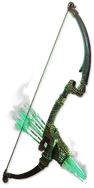 Direct relationFairgraves' Curse
Adds (76-98) to (126-193) Fire Damage
 Direct relationFrostbreath
Adds (8-12) to (16-20) Physical Damage
 Direct relationHateforge
(300-400)% increased Armour
 Direct relationHorns of Bynden
+20 to Armour
Direct relationHyrri's Ire(100-150)% increased Evasion Rating
 Direct relationKeeper of the Arc
(240-340)% increased Armour and Energy Shield
 Direct relationKitoko's Current
(30-50)% increased Energy Shield
 Direct relationLeopold's Applause
(60-100)% increased Energy Shield
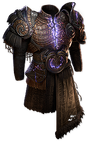 Direct relationLightning Coil
(80-120)% increased Armour and Evasion
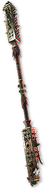 Direct relationNazir's Judgement
Adds (30-36) to (75-81) Physical Damage
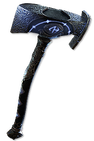 Direct relationOlrovasara
Adds 1 to (60-80) Lightning Damage
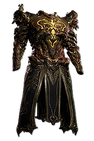 Direct relationPerfidy
(300-450)% increased Armour and Evasion
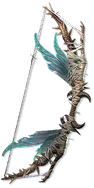 Direct relationPeriphery
Adds (48-59) to (75-97) Fire Damage
 Direct relationPlaguefinger
(30-50)% increased Evasion and Energy Shield
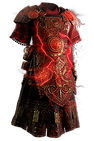 Direct relationRedflare Conduit
+(50-70) to maximum Mana